“Last semester, when I asked my class, as I do each quarter, how many of them had ever spent a night sleeping in the wilderness the answer was zero, and I realized for the first time in my teaching life I might be standing in front of a room full of students for whom the words ‘elk’ or ‘granite’ or ‘bristlecone pine’ conjured exactly nothing…
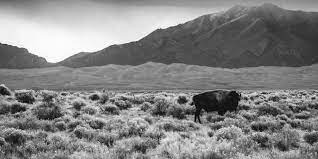
Now, amid the most sweeping legislative attack on our environment in history, a colleague wondered aloud to me whether it was feasible, or even sane anymore, to teach books that celebrate nature unironically. This planet hadn’t even been mapped properly a couple of hundred years ago, and now none of it, above or below ground, remains unsullied by our need for extraction. As we hurtle toward the cliff, foot heavy on the throttle, to write a poem about the liveliness of a newly leafed out aspen grove or a hot August wind sweeping across prairie grass or the smell of the air after a three-day rain in the maple forest might be at best so unconsciously naiive, and at worst so much part of the problem, we might as well drive a Hummer and start voting Republican.
Maybe. But then again, maybe not. Maybe this is the best time there has ever been to write unironic odes to nature.
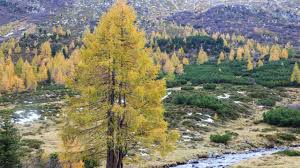
I have spent most of my life outside, but for the last three years, I have been walking five miles a day, minimum, wherever I am, urban or rural, and can attest to the magnitude of the natural beauty that is left. Beauty worth seeing, worth singing, worth saving, whatever that word can mean now. There is beauty in a desert, even on that is expanding. There is beauty in the ocean, even one that is on the rise.
And even if the jig is up, even if it is really game over, what better time to sing about the earth than when it is critically, even fatally wounded at our hands. Aren’t we more complex, more interesting, more multifaceted people if we do? What good has the hollow chuckle done anyone? Do we really keep ourselves from being hurt when we sneer instead of sob?

If we pretend not to see the tenuous beauty that is still all around us, will it keep our hearts from breaking as we watch another mountain be clear-cut, as we watch North Dakota, as beautiful a state as there ever was, be poisoned for all time by hydraulic fracturing? If we abandon all hope right now, does that in some way protect us from some bigger pain later? If we never go for a walk in the beetle-killed forest, if we don’t take a swim in the algae-choked ocean, if we lock grandmother in a room for the last ten years of her life so we can practice and somehow accomplish the survival of her loss in advance, in what ways does it make our lives easier? In what ways does it impoverish us?
We are all dying, and because of us, so is the earth. That’s the most terrible, the most painful in my entire repertoire of self-torturing thoughts. But it isn’t dead yet and neither are we. Are we going to drop the earth off at the vet, say goodbye at the door, and leave her to die in the hands of strangers? We can decide, even now, not to turn our backs on her in her illness. We can still decide not to let her die alone.”
 A Burd in Flight